
The British brand is going through one of its most complex moments, between discreet figures, a controversial rebranding and a prototype that has not finished convincing. Can Jaguar's legacy illuminate its electric future?
Jaguar is not simply a car manufacturer. It is a firm with more than 80 years of history, born in the United Kingdom and recognized for its mix of elegance, performance and character. The motorsport world remembers her not only for her victories at Le Mans, but also for creating incredible cars, including one of the most admired cars of all time: the Jaguar E-Type. This model is one of the few cars exhibited as a work of art at the MoMA in New York, a symbol of a time when Jaguar not only competed, but inspired.
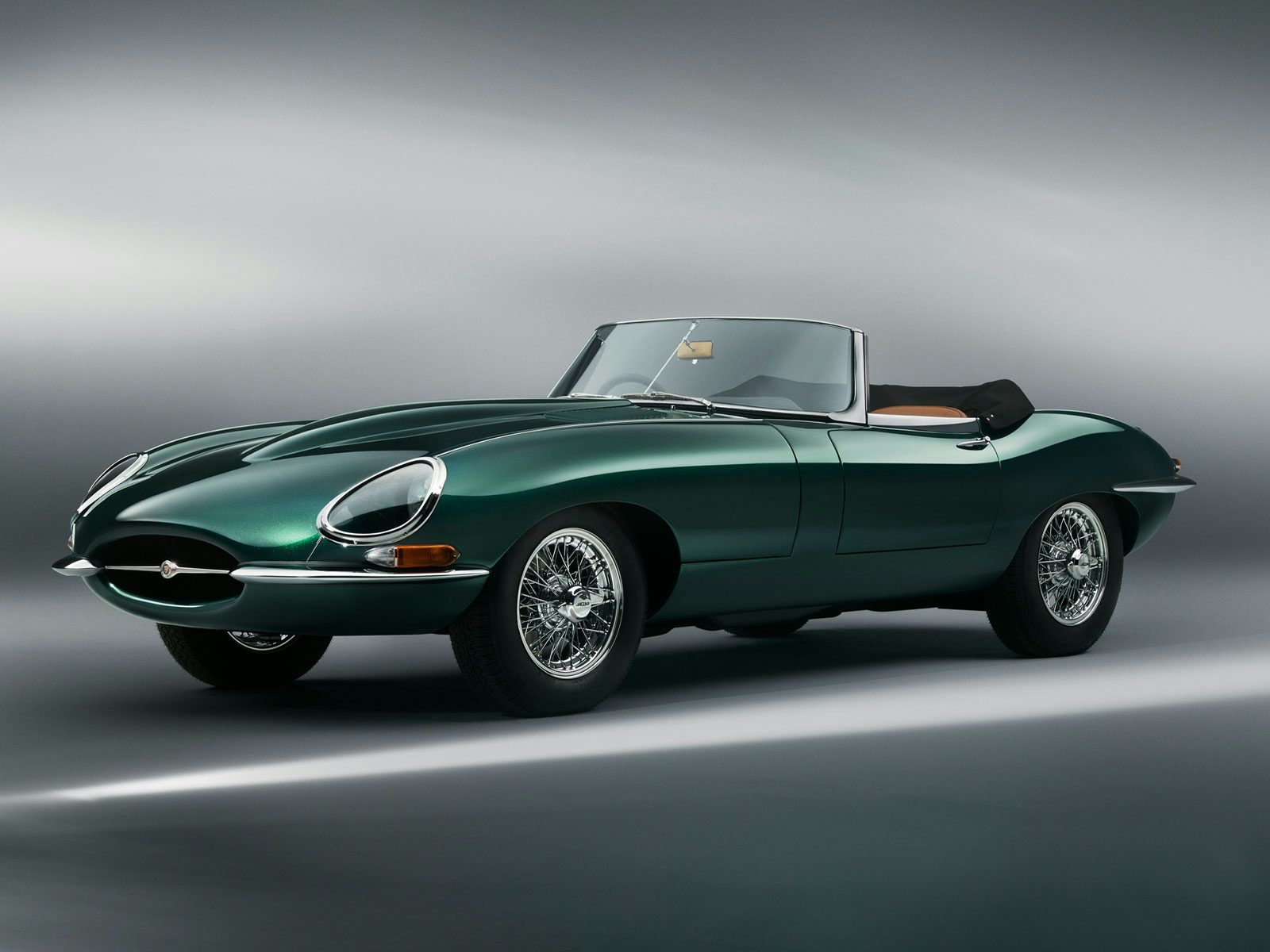
That legacy is precisely what makes the present more demanding. Because when a brand has been iconic, every current decision is measured by double standards: innovation must coexist with memory. And it is in the second where Jaguar can possibly show his chest and where someone who wants a Jaguar is going to notice.
Sales 2025: a difficult numerical context
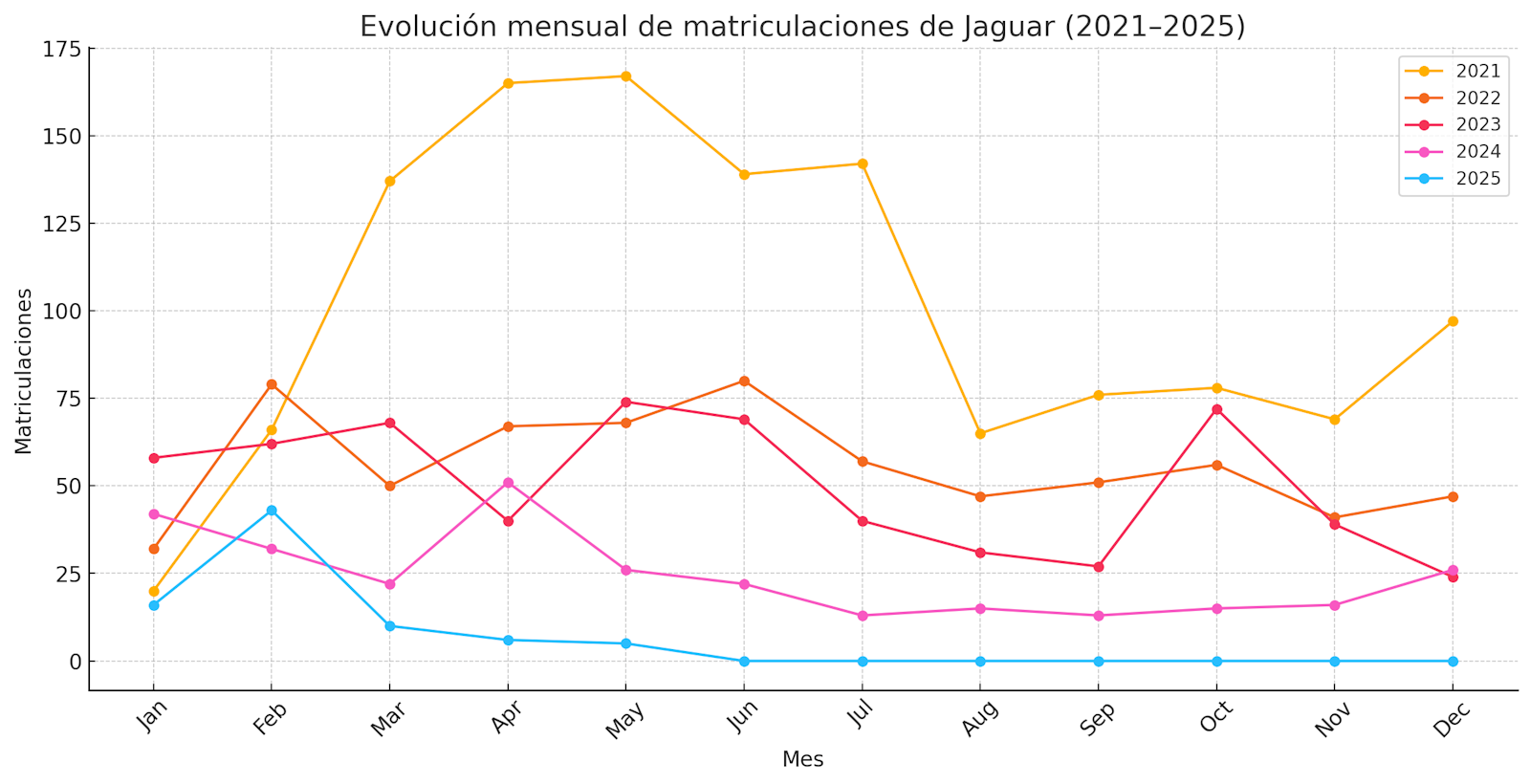
During the first six months of 2025, Jaguar has registered only 80 units in Spain, which represents 0.01% of the national market. A figure that contrasts with its average of more than 2,000 units per year during the 2010s or the 4000 of 2018. With the data updated as of July 1, the best-selling model has been the F-PACE, which represents more than 80% of those registrations. The range is completed by the E-PACE and the F-TYPE, with merely symbolic figures. There are even models currently on the Jaguar website that have not represented any sales to date.
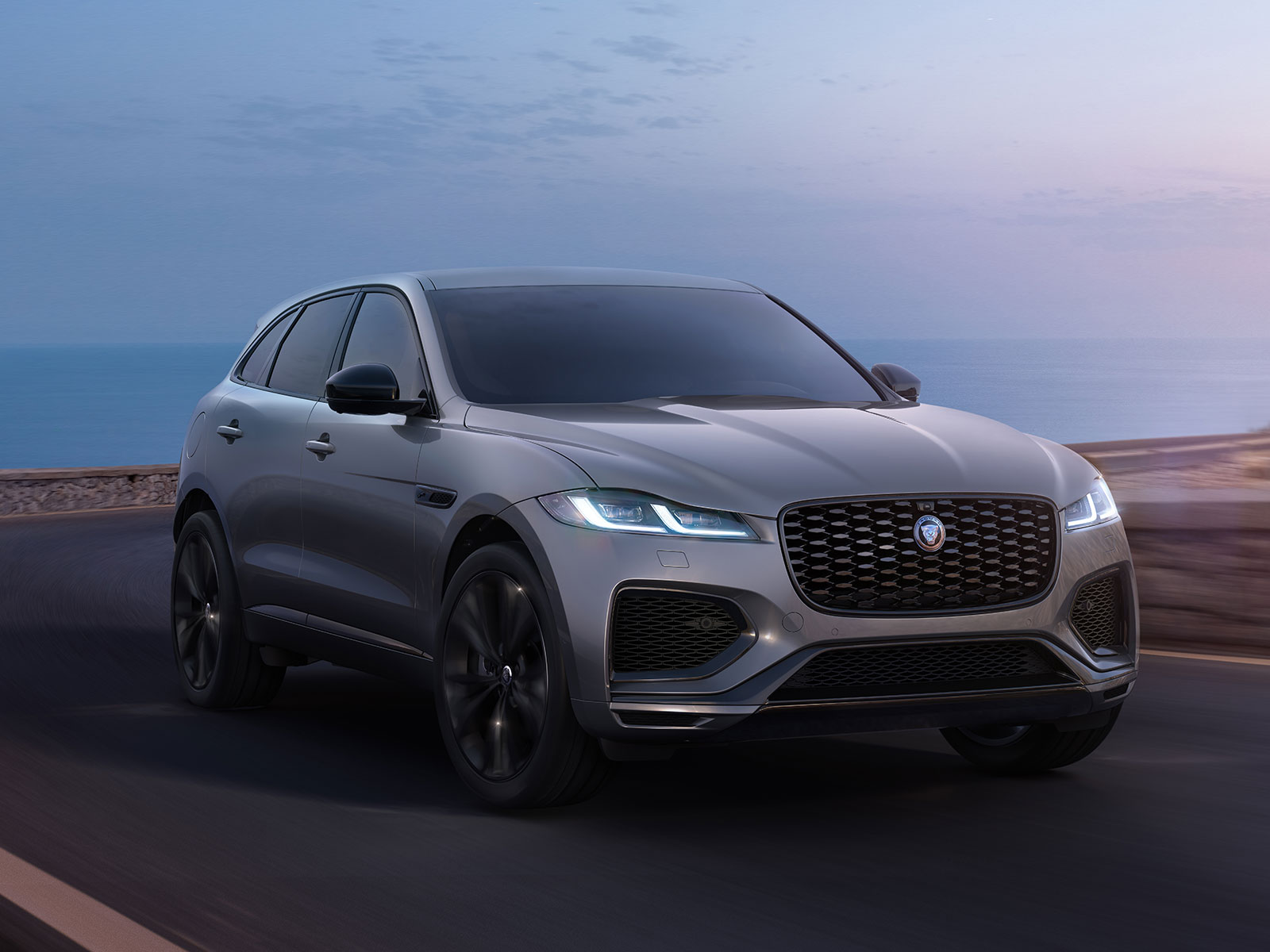
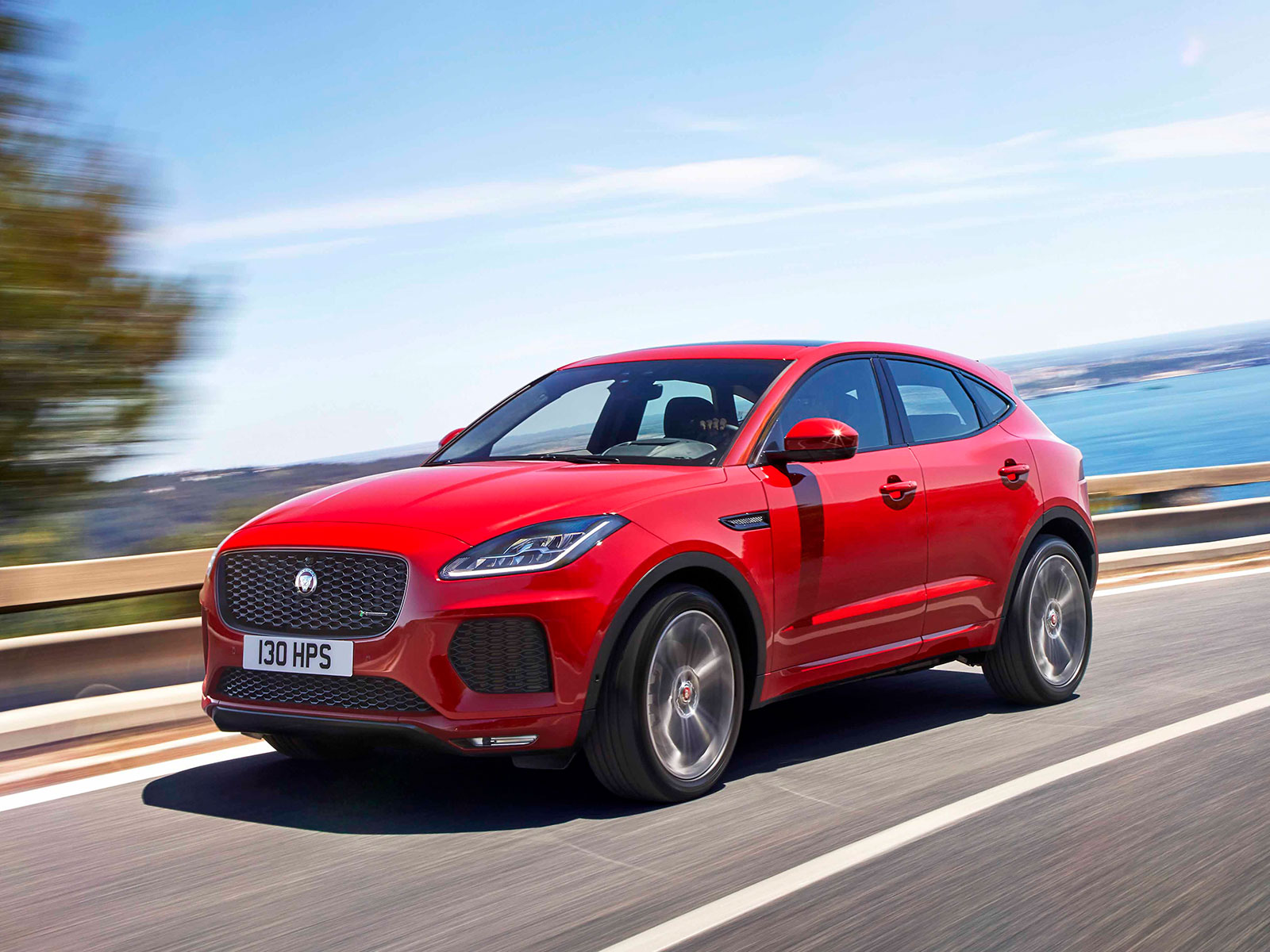
Jaguar has gone from competing in the league of premium brands, to maintaining a reduced offer, testimonial sales and a very diluted brand presence. The monthly evolution graph shows it: a sustained decline that has been stalking the brand year after year. In fact, other premium brands such as Porsche, Alpine or Maserati, even more niche, have registered more sales than Jaguar itself. And others with higher costs such as Ferrari have sold only 20 cars less than the English.
Jaguar in Facts
Jaguar sales year by year:
| Year | Units |
|---|---|
| 2015 | 1731 |
| 2016 | 3656 |
| 2017 | 3551 |
| 2018 | 4398 |
| 2019 | 3384 |
| 2020 | 1699 |
| 2021 | 1221 |
| 2022 | 675 |
| 2023 | 604 |
| 2024 | 293 |
| 2025 | 80 |
Jaguar's best-selling models
| Model | Units |
|---|---|
| E-PACE | 11 |
| F-PACE | 65 |
| F-TYPE | 4 |
Rebranding and reaction: modernization or a lost identity?
In 2024, Jaguar presented a complete rebranding: new image, new logo, and a more abstract slogan ("Copy Nothing"). The iconic jumping feline known as leaper disappeared from the front, something that was highly criticized by the most enthusiasts. The brand put aside the image that made it an icon replacing it with a more neutral aesthetic. A new image possibly closer to those of the Scandinavian brands.
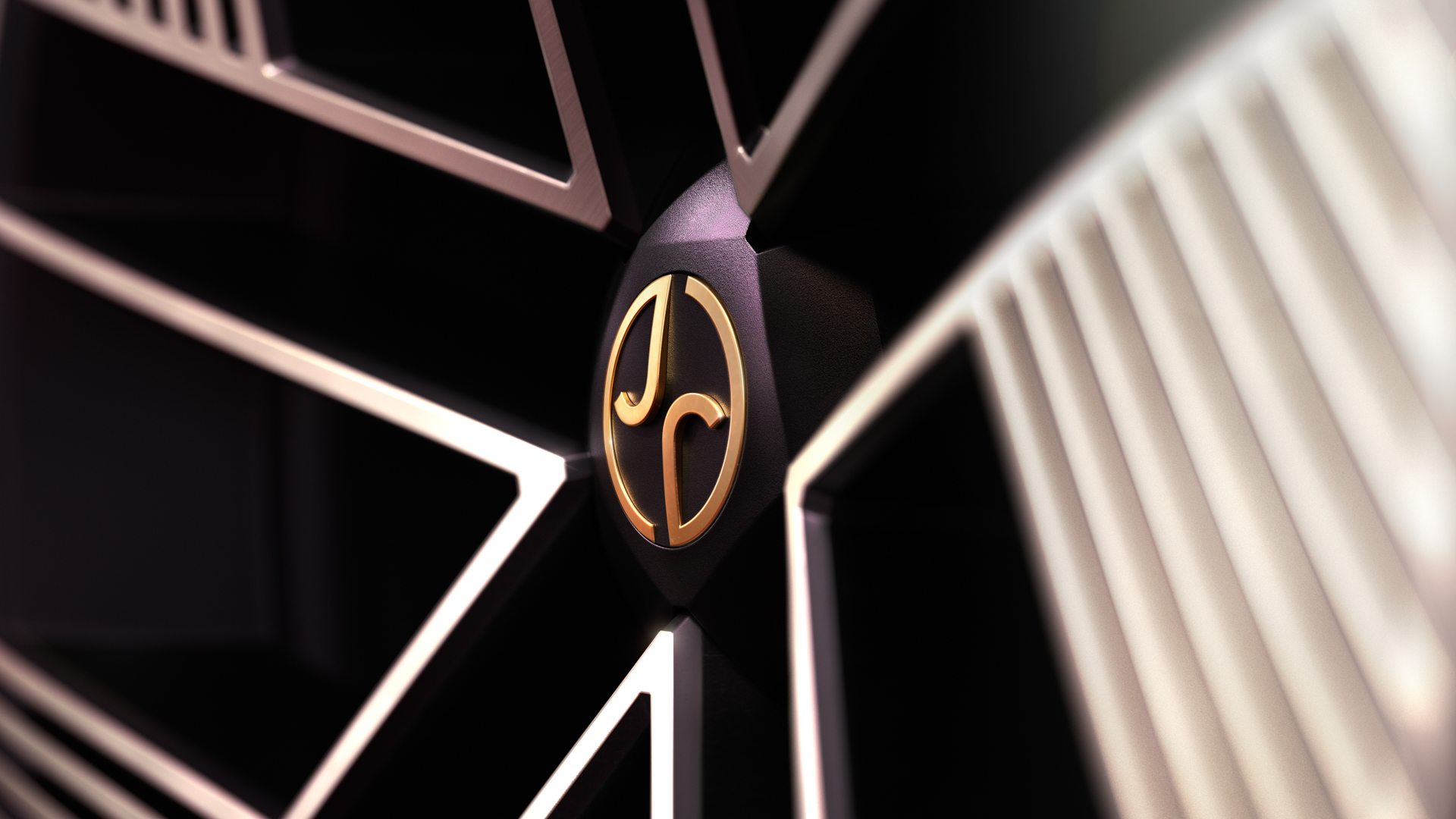
This change has not been uncontroversial. From specialized media to users on social networks, many criticized the new identity as "too generic," "pretentious" or "alien to the history of Jaguar." Many ventured to say that Jaguar's hallmark had been lost, comparing it to hypothetical cases of what would happen if Ferrari lost its Cavallino, or if Lamborghini removed its iconic Miura bull from its image. In the case of Jaguar, it may even be more noticeable because the brand name is the animal itself.
The Type 00: the prototype that divides and does not convince
The Jaguar Type 00, presented at events such as Miami Art Week and the Goodwood Festival, represents the first visual step of this new era. A 100% electric car, with butterfly doors and sculptural proportions, aims to project the future of Jaguar. However, the prototype has generated an uneven reception.
While some voices value his audacity to rejuvenate the brand to recover it and detach it from an ancient past in our days, a large part of the public perceived it as an experiment far from the brand's DNA. Comments such as "it looks like a Lego toy" or "it's an exercise in style that doesn't excite" were common among attendees and press. Even the absence of functional elements such as mirrors, rear window or windshield wipers was criticized for its lack of connection with a realistic product. In fact, even the campaign to present the car was criticized.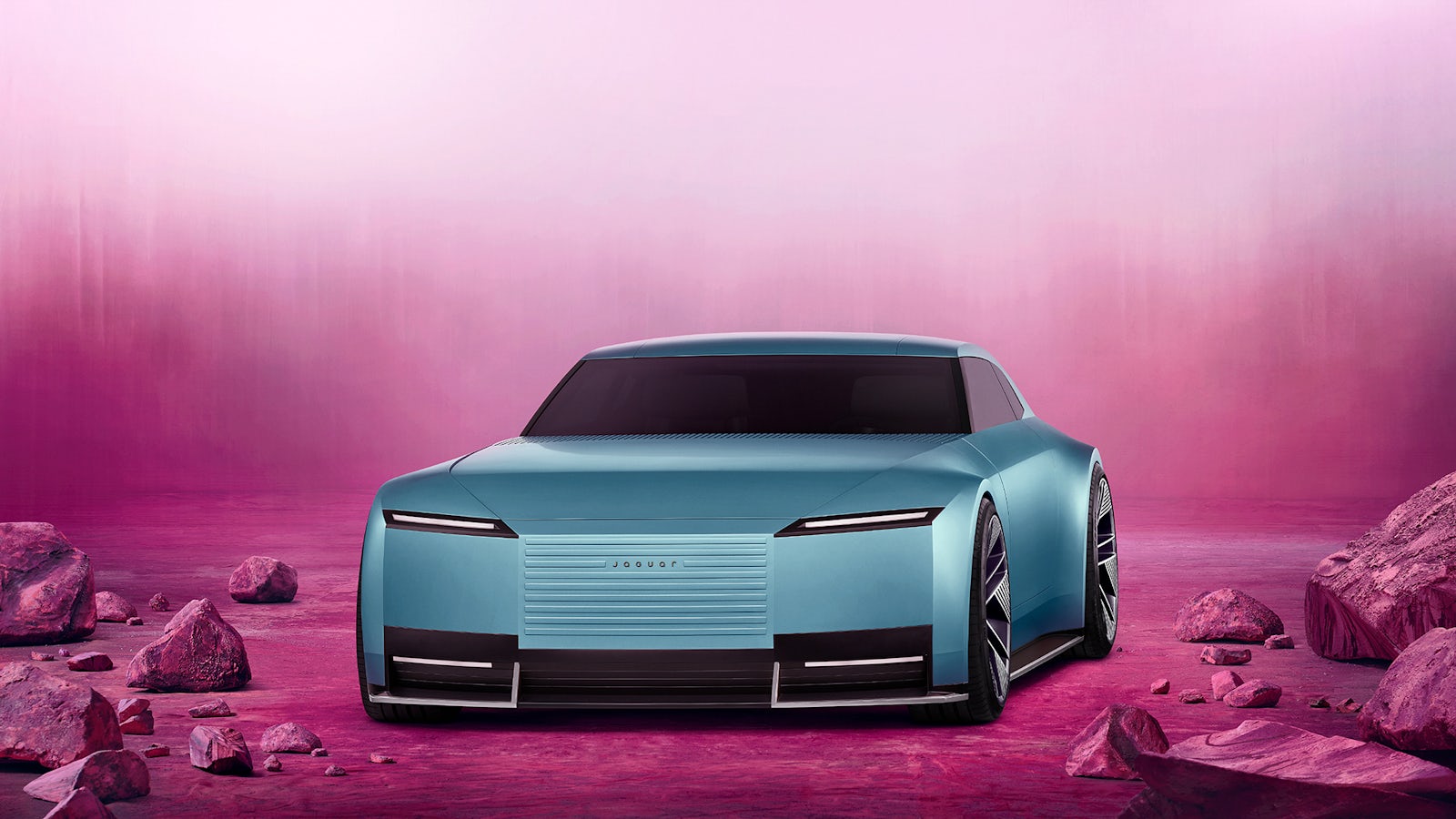
But, beyond its design, engine, aesthetics... again, the new logo applied to the prototype reinforced the voices calling for its removal: a design that is too childish, which many consider incompatible with Jaguar's legacy.
Reverse? Rumors, corrections and a possible twist
All this environment has fuelled a growing debate: should Jaguar reconsider its strategy? Internal criticism, the controversial reception of the Type 00 and the impact of the rebranding, criticized by users, enthusiasts and experts have made some analysts suggest a partial return to classic elements, at least to maintain the emotional connection with its traditional clientele.
At the moment, Jaguar has not announced any step back. But the fact that executives have publicly clarified that "the final production design may differ" from the prototype and that "the visual identity can still evolve" has opened the door to the possibility of adjustments. Because if the objective is to position yourself in the segment of emotional luxury, perhaps all that made you buy a Jaguar instead of another premium car, can be lost by disconnecting the user from the legacy of the brand, its history, its roots...